
 |
| Lt. George A. Hinton (2nd from right) |
 |
| USMC issued footlocker |
“Maybe you can write about these things that your Granndpa Jo carried with him while he was serving in the war.”
Pictures below are some of the artifacts that my father saved from his time in the war.

To the left is an example of the silk maps that flight-crews carried in their survival kits in case they were shot down over water. The maps shows the direction of the prevailing water currents and their speeds so the downed flier could approximate his position. The two maps I have are framed and are in much better shape
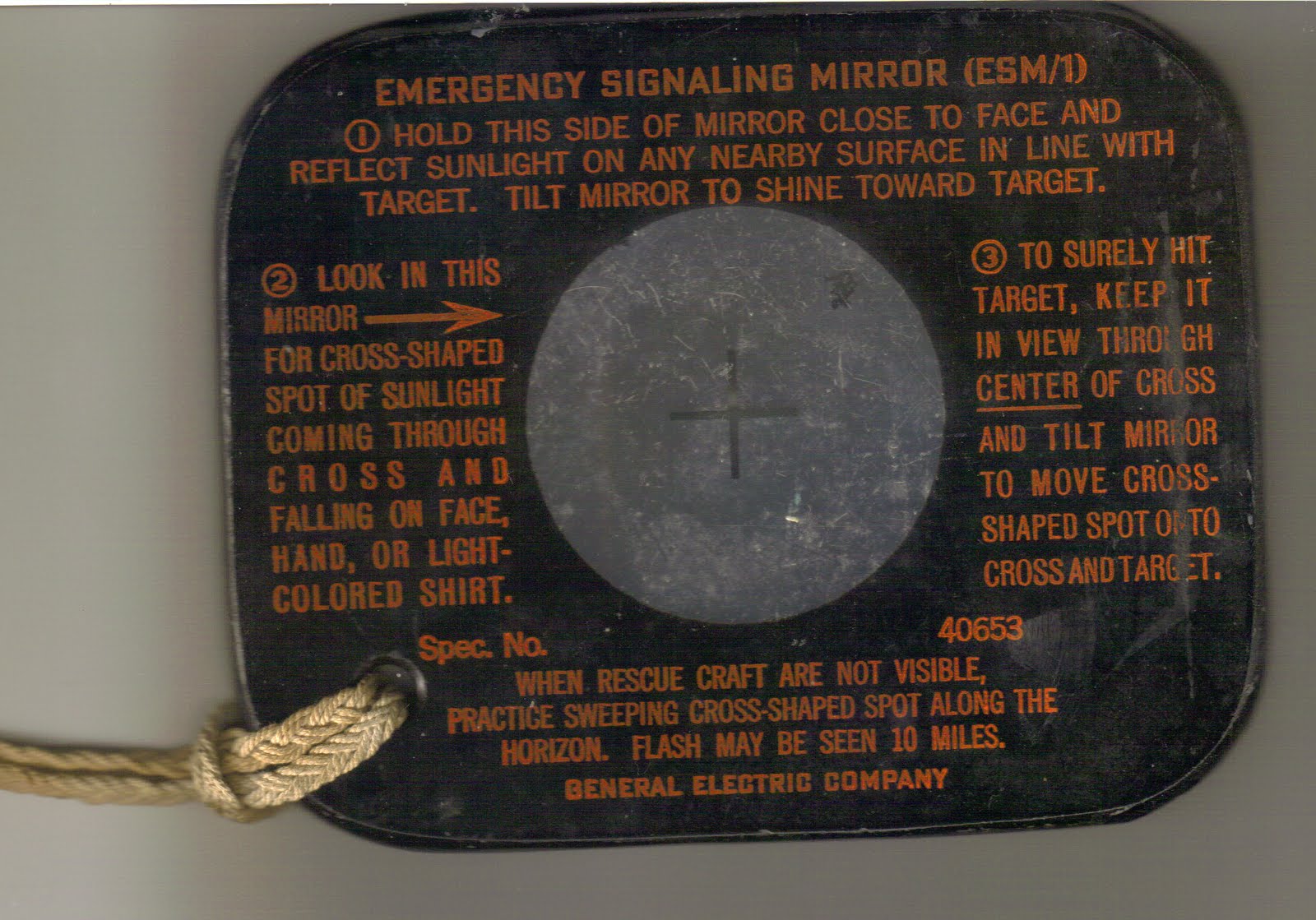
On the right is a mirror that was used by downed fliers to send signals to aircraft and ships trying to located the stricken crew. The side pictured here contains instructions on proper use. The opposite side is a mirror to reflect light towards potential rescuers.

This is exactly like the watch that my father wore when he flew
As a matter of fact, I keep his watch in my bedroom dresser and it still keeps accurate time. I just don't feel comfortable wearing it because it does need to be wound from time to time and I would hate to break the timing spring . The fluorescent numbers and watch hands still glow in the dark.

My father carried this dollar bill with him during the war and for many years after returning to civilian life. It's very interesting but I'm afraid that much of it's significance may be lost to the ages. The story goes something like this: people in the armed forces would carry paper currency with them and would have visiting USO stars autograph the money. After the war, my father flew professionally and continued to gather signatures as he flew. I just wish I knew who had signed this bill. The only signature I can recognize is that of Ed Sullivan. It is on the right-hand side of the bill and runs vertically just to the left of the 1s. There are signatures on both sides of the bill but many have become faded or smudged and are impossible to read. I don't even know where to begin trying to decipher the writing.
I needed to share more than just the "things" that my father carried with him during the war. So printed up the following excerpt from a posting I found online shortly after my father had passed away. It comes from article written by 2 former Marine Corps officers entitled "The Story of SCAT" . http://centercomp.com/dc3/1910.html
 |
| Lt. George A. Hinton (Middle standing) |
"Picking a Pilot"

Now my father had shared many "war stories" with me but I had never heard this one until I "Googled" his name a few weeks after he passed away.

I didn't know about the watch and had forgotten about the dollar bill.
ReplyDeleteI have been writing Mom's childhood and war "stories" down lately, because I know I am the repository and they shouldn't be lost. I had read that bit about the landing in something of Dad's that was with all his things at our house. This was a very nice blog and it is great with the photos and esp
Papa Joe in his fatigues!! Good Job G Scott Hinton